
Founder Insight · New Build
Three New Builds, Three Very Different Engineering Experiences
Why the most prestigious project isn't necessarily the one that teaches you the most
Why the most prestigious project isn't necessarily the one that teaches you the most
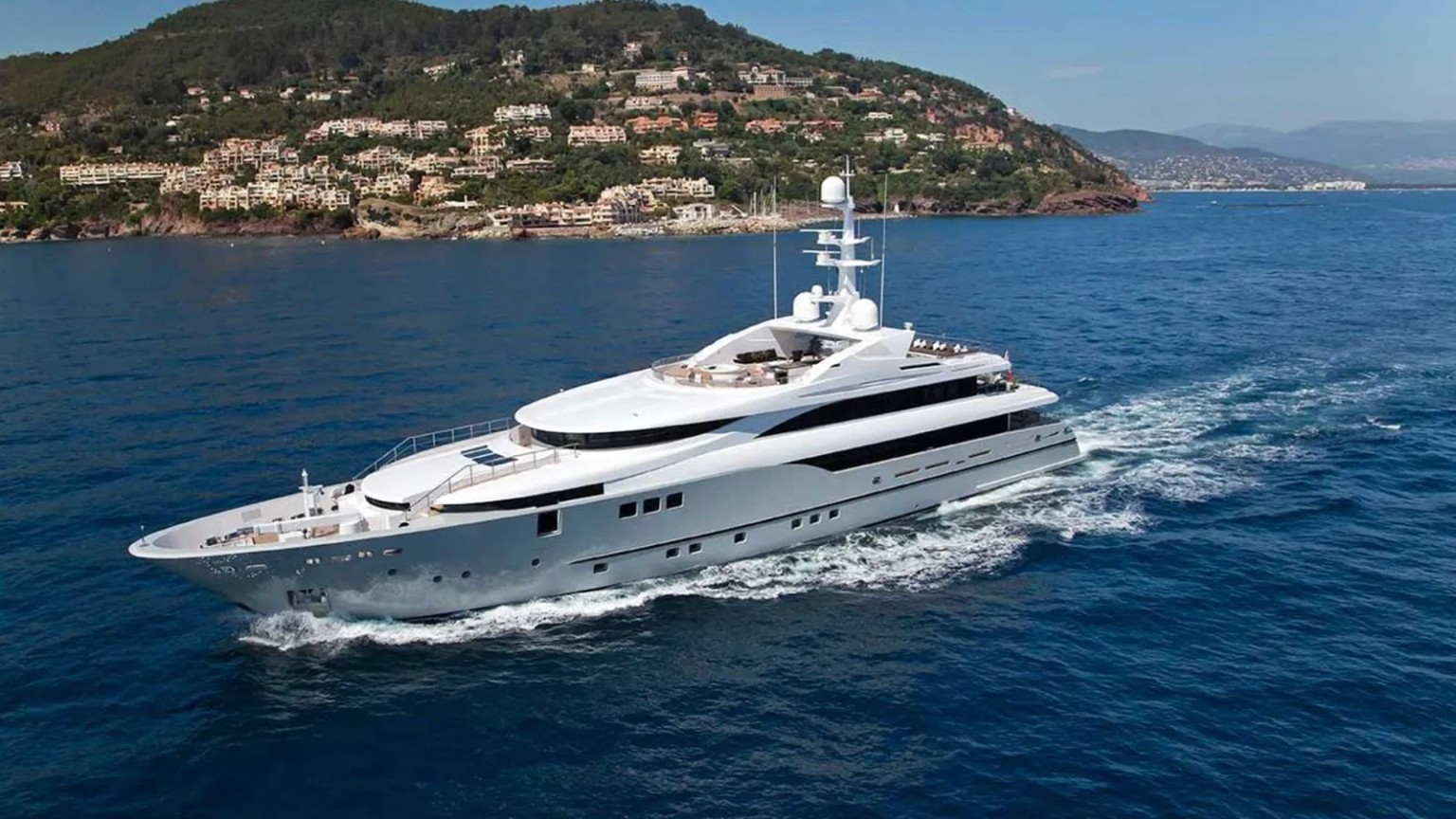
Over the course of my career as a marine engineer, I have had the opportunity to be involved in three very different yacht new-build projects.
The first was a 138-metre Lürssen yacht, completed in 2005. It was also my introduction to the superyacht industry after beginning my career aboard cruise ships and commercial vessels.
The second was a 54-metre yacht built by Mariotti in Genoa, Italy, and completed in 2012.
Most recently, I have been part of the build of an 80-metre Amels yacht in Vlissingen, the Netherlands.
On paper, the first and most recent projects are perhaps the ones that attract the most attention. Both came from highly established shipyards with formidable reputations for producing complex, high-end yachts.
Yet the project I remain most proud of is the one in the middle.
And there is an important engineering lesson in why.
Joining the 138-metre Lürssen in 2005 was an extraordinary introduction to yachting.
I had come from cruise ships and commercial vessels and suddenly found myself involved with a yacht of enormous scale and complexity, being produced by one of the industry's most established builders.
It was an incredible environment in which to learn.
But there is something particular about joining a project at a yard with decades of experience building vessels of this calibre: you are entering an already mature system.
The yard knows how it builds yachts. Its processes have been refined through previous projects. Standards are established, responsibilities are well defined and much of the engineering philosophy has already been determined.
There is an enormous amount to learn from being in that environment.
There isn't necessarily an enormous amount to change.
Almost two decades later, I found myself in another highly developed new-build environment, this time on an 80-metre Amels project in Vlissingen.
Technology has moved forward enormously since 2005. Vessel systems have become increasingly integrated, environmental requirements have changed, automation has advanced and the technical complexity expected aboard a modern yacht has increased substantially.
But one aspect felt familiar.
Once again, I was working within an organisation with an established way of building yachts.
There is considerable value in experiencing that process. But there is also an important distinction between being involved in an exceptional project and having a significant influence on its outcome.
My second new build was very different.
Completed in 2012, the 54-metre yacht was built by Mariotti in Genoa.
The circumstances created a completely different engineering experience. Rather than simply joining an established yacht-building formula, I found myself in an environment where there was considerably more opportunity — and need — for the vessel's engineering team to contribute.
I became involved at a level I had never experienced before.
I wasn't simply arriving during commissioning and learning how somebody else had designed the vessel. I was involved throughout the project and across the details that ultimately determine whether a yacht merely looks impressive at delivery or actually works well in operation.
That distinction matters.
A yacht is an extraordinarily interconnected engineering system. Decisions made during design and construction can affect accessibility, reliability, maintainability and operation for years afterwards.
Something that appears perfectly acceptable on a drawing can become frustrating when a component needs to be serviced at sea.
Equipment that individually meets its specification may behave very differently once integrated into the wider vessel.
And sometimes a design can work perfectly from a purely technical perspective while completely missing what the person using it actually needs.
One relatively small example from that build has stayed with me because it illustrates this particularly well.
The owner's cabin incorporated a hydraulic balcony door.
The concept was excellent. At the press of a button, the side of the cabin lowered to form a private balcony.
Simple. Elegant. And importantly, something the owner could operate himself.
There was just one problem.
The balcony handrails were intended to be stored elsewhere on the vessel and installed manually.
So the owner could press a button and open his balcony — but he couldn't actually walk onto it.
First he would have to call the crew. Someone would need to enter the owner's cabin, bring in the handrails and manually install them before the balcony could safely be used.
Technically, the balcony worked.
Operationally, in my view, it didn't.
I challenged the arrangement.
If the concept was that the owner could open his own balcony at the press of a button, then the finished engineering solution needed to deliver exactly that.
The difficulty was that by this stage the balcony door itself had already been manufactured.
There was insufficient space simply to hide a conventional powered handrail inside it, and whatever solution we developed still had to satisfy the applicable classification requirements for the intermediate horizontal rails.
A number of possible arrangements were considered, but they introduced compromises of their own. Chains and similar solutions created problems with movement, snagging and noise and, to me, simply didn't belong in what was supposed to be an elegant automated system.
The solution I developed used polished stainless-steel horizontal profiles with powered folding vertical supports.
At the intersections, nylon bushings allowed the vertical members to move while sliding along the horizontal rails. This gave the structure the movement it needed within the very limited available space while maintaining the required handrail arrangement.
We then integrated the deployment sequence into the balcony-door controls.
The owner's experience remained exactly as originally intended:
Press one button.
The balcony door lowered. Once the system received confirmation that the door was open, the handrail deployment sequence began. The completed sequence left the balcony ready to use.
No crew entering the cabin.
No handrails being carried through the yacht.
No additional procedure for the owner to think about.
It wasn't one of the vessel's largest engineering systems.
It probably wasn't one of its most expensive.
But without solving it, I suspect the owner would rarely have used the balcony at all.
And that is precisely why seemingly small engineering decisions matter.
A system can satisfy its technical specification and still fail the person who actually has to use it.
That balcony was only one example of the level of involvement I had throughout the 54-metre project.
It changed the way I thought about new-build engineering.
For the first time, I could repeatedly see a direct relationship between identifying a problem, applying engineering judgement, developing a solution and seeing that solution become part of the finished vessel.
Shipbuilding is inherently collaborative. No individual builds a yacht, and successful projects depend upon designers, shipyard teams, subcontractors, suppliers, owner's representatives and crew working together.
But of the three new builds I've experienced, this is the one towards which I have always felt the greatest sense of personal ownership.
Privately, I have always called it “my boat.”
Not because I built it.
Because it was the project where I could most clearly see the difference my involvement had made.
There is therefore a slightly amusing contradiction in my CV.
People are often most impressed by the first and latest new builds.
I understand why.
They are substantial yachts produced by two of the industry's best-known builders, and I'm proud to have been involved with both.
But neither represents the project where I believe I made my greatest contribution.
That experience has stayed with me throughout my career.
The value of an engineer isn't measured by the prestige of the project they're standing on. It's measured by the difference their involvement made to the finished vessel.
It is very easy in our industry to associate experience with vessel length, gross tonnage, famous shipyards or recognisable names.
Those things provide useful context.
But they don't necessarily tell you what somebody contributed.
The more useful questions are different.
What problems did they identify?
What decisions did they influence?
Did they recognise an operational problem that wasn't obvious on the drawing?
Could they turn that observation into a practical engineering solution?
Did they identify problems before those problems became expensive?
Did they understand how the vessel would actually be operated and maintained?
And when something didn't work as expected, could they determine why?
Those experiences helped shape the engineering philosophy behind Torven Marine.
Our purpose isn't simply to put experienced people onto impressive projects.
It is to provide technical expertise where that expertise can change the outcome.
Sometimes that means supporting a shipyard working through an unfamiliar technical challenge.
Sometimes it means strengthening an owner's team during design, construction or commissioning.
Sometimes it means investigating a system that isn't performing as intended.
And sometimes it means noticing the apparently small detail that everyone else has overlooked — but which will matter every single day once the vessel is delivered.
The projects where everything is already defined and functioning perfectly rarely need another consultant standing on the sidelines.
The interesting projects are the ones where there is a problem to understand, a decision to improve or a capability gap that needs filling.
Three new builds, spanning almost two decades, taught me many things about yacht construction.
Perhaps the most important was also the simplest:
Being on the project is not the same as making a difference to it.
At Torven Marine, making that difference is the point.
If you're looking for independent engineering input on a new-build, refit or troubleshooting challenge, get in touch — or read more about our independent technical consultancy service.
Tell us about the vessel, system or project. We'll respond with how Torven Marine can help, and what we'd need to get started.